Below: what RTS is, the symptoms in plain language, what the science says your brain did with all that hellfire, and how people actually heal, with every claim sourced, because we’re atheists and that’s how we do things.
You are a grown adult. You have seen genitals. You have birthed babies. You have barfed all over your cousin’s bachelor party and lived to tell the tale. Yet, somehow, you still can't seem to give yourself permission to sleep in on a Sunday morning without the guilt. You left the pews a decade ago. You burned the prayer journals. You finally evicted Thunder Daddy from his gold-plated penthouse in your mind.
So, why does the shame still hit harder than Joe-Bob's Purple-Durple Churry-Bomb high dose edibles?
There's no easy way to say it: this lingering, hollow ache is Religious Trauma Syndrome (RTS).
[SOURCE: Marlene Winell, Leaving the Fold, 2011]
It is not imaginary.
It is not you being dramatic.
It is not “conviction from the Holy Spirit.”
It is conditioning.
It is a structural alteration of your wetwear. Your brain is essentially haunted by the ghosts of sermons past. To put it simply: the lingering spectre of your churchy upbringing are still bouncing off the walls of your skull.
This isn't going to be some fluffy "spiritual journey." This is a gritty autopsy of your own conditioning. Your frontal lobe was hijacked by a high-speed delivery system for pure, unadulterated horseshit.
The cleanup is going to be messy.
Religious Shame and Self-Sabotage: The Sacred G-String Effect
Indoctrination is like a spiritual g-string: It's three sizes too small. It's made of coarse burlap. It's currently sawing your sanity in half.
Many of you spent your childhoods being told that your natural parts are a threat to the universe. The church acted like your meat garden was a biological weapon. They swore that if anyone caught a glimpse of your fun bags, the whole world would spontaneously combust.
You know, logically, that your neighbour is not going to drop dead because they peeped your pork sword through the window while you were waiting for the coffee to brew. However, the church convinced you that your very thoughts were a health threat. They treated your natural desires the way you might treat a retired fireman touring Walmart with assless chaps. They repeated it. They repeated it again. They pounded it into your skull until the mere thought of the one-eyed trouser snake sent you into a conniption worthy of the Sunday stage in a Pentecostal church.
At its core, this has always been about control, with “modesty” serving as the marketing department. They want you to think your own brain is a hazardous waste site. They want you to distrust your very senses. They want you to loathe yourself so thoroughly that the only path to happiness is grovelling at the foot of a magic zombie.
It was driven so deeply into you, that even when you finally rip that burlap thong off, you still walk like you’re wearing it. The mental indentations are deep. You still flinch at the thought of pleasure. You still treat your own skin like a crime scene.
This is the phantom itch of Religious Trauma Syndrome.
The stakes are so much higher than chafing undies. When you believed, they were about damnation and the total collapse of your eternal salvation if you dared to be free. That's no small thing.
Why You Still Fear Hell After Leaving Religion: Fear Is a Hell of a Drug
When you were told, repeatedly, that:
You are inherently sinful.
Your thoughts are monitored.
Your desires are dangerous.
Eternal torture is on the table.
One mistake could cost you forever.
The amygdala heard “existential threat” and built circuitry accordingly.
The human fear system (right there in the amygdala) encodes threats rapidly and deeply, especially when paired with authority and repetition, which is entirely unfortunate, because Sunday school specialized in both.[SOURCE: LeDoux, 1996]

Fear-based religious messaging, particularly about hell, activates the same neural pathways involved in survival-based threat responses. Translation? Sermons about hell light up the brain’s threat circuitry the way any survival alarm would. [SOURCE: Shariff & Norenzayan, 2011]
Your brain processed it as a burning building. Not metaphor. Not a cautionary tale or a harmless fable. It's straight up life and death to a kid; it's fight or flight, a threat to their very existence.
The amygdala does not give a shit about theology. It responds to perceived threat. And hell was presented to you as a five-alarm inferno with your fucking name on it.
Of course you still have fear. Who the fuck wouldn't?
That wiring doesn’t disappear just because you read a little Hitchens.
Is Religious Trauma Syndrome a real diagnosis?
Let’s get the paperwork question out of the way, because some smug cousin is going to bring it up at dinner: no, Religious Trauma Syndrome is not its own entry in the DSM-5. What is in the DSM-5 is a code called “Religious or Spiritual Problem” (V62.89, or Z65.8 if you’re feeling international), filed under Other Conditions That May Be a Focus of Clinical Attention. That’s the drawer where psychiatry keeps the real things it hasn’t finished arguing about yet.
The term itself comes from psychologist Marlene Winell, who coined Religious Trauma Syndrome in 2011 after decades of sitting across from people who described the same thing in nearly the same words: the fear, the guilt, the identity freefall, the grief. She named it because her clients needed a name for it. And naming it does real work. It is a lot harder to feel like a broken, dramatic mess once you learn there’s a documented pattern with your symptoms all over it and a waiting room full of people nodding along.
And if a committee’s blessing is your bar for “real,” remember that the DSM didn’t recognize PTSD until 1980. Vietnam veterans were told to walk it off for decades first. Psychiatry’s filing system has always run a few decades behind actual human suffering. Your symptoms don’t care what page they’re printed on.
Symptoms of Religious Trauma Syndrome (RTS): What It Actually Feels Like
Religious Trauma Syndrome doesn’t announce itself with a trumpet blast. It doesn’t send you a diagnostic pop-up. It shows up when you’re folding laundry, enjoying a BJ, or trying to have a calm Tuesday... and suddenly your nervous system reacts like you’ve just committed a felony against the cosmos.
You know you don’t believe in hell. But your body still sometimes does.
Here’s what that can actually look like:
1. Persistent Hypervigilance Around “Sin”
You no longer accept the doctrine, but your brain still scans your thoughts for violations. A stray sexual idea, a critical thought about religion, even a moment of pride can trigger a flash of anxiety before logic catches up. This is a conditioned threat response. When children are repeatedly told their thoughts are dangerous, can you blame the brain for learning to treat internal experience as risk?
That reaction was drilled in before you even knew what a prefrontal cortex was. Years of adults pairing normal human impulses with eternal consequences turns your nervous system into a smoke detector that goes off when you make toast. The theology may have moved out, but the alarm system is still shrieking at burnt crumbs.
While your former church friends might think you're being melodramatic, you’re really just running an outdated firewall that was installed by people who thought curiosity was a virus.
You just need a little emotional IT and you'll be set.
2. Religious Guilt: Anxiety Linked to Pleasure or Autonomy
Many people raised in high-control religion were trained to treat joy like contraband. Independence? Suspicious. Sexual expression? Basically a felony with eternal sentencing guidelines. When you grow up hearing that happiness is a gateway drug to damnation, your nervous system doesn’t just forget that memo because you read a few science books and unfollowed your pastor.
So now, when life feels good, when the sex is solid, the career hums, the Sunday morning is deliciously godless, there’s a tiny internal flinch. A reflexive “careful.” You catch yourself waiting for the other shoe to drop. Or the lightning bolt. Or the divine audit.
That flinch is conditioning. Years of pairing pleasure with punishment trained your nervous system to brace first and ask questions later.
Your body spent a long time learning that freedom came with consequences. It’s going to need more than a podcast episode to accept that the sky is no longer keeping score.
3. Religious Scrupulosity: Excessive Moral Perfectionism
A disturbing number of ex-believers stagger through adulthood like they’re still being graded by an invisible dean with a clipboard and a flamethrower. Every social interaction becomes a damn ethics exam. You say “no” to someone and immediately draft a three-paragraph apology like you’ve just detonated a small village. You over-explain. You over-compensate. You try to glow with moral purity so bright it could guide ships through fog.
Why?
Because you were raised in a psychological casino where the house always wins and the penalty for a bad bet was eternal combustion! Your brain is still trying to force you to see things in black and white, to snap back to the binary thinking that was drilled into you as a child.
This is normal, and it's the self-awareness and how you move forward that matters.
4. Intrusive Religious Thoughts Under Stress: “What If I’m Wrong?”
Stress is gasoline.
You get tired, overworked, blindsided by a bill, a breakup, a bad headline. Cortisol spikes and suddenly the ancient horror-movie reel starts flickering in the background. The old hellfire trailer. You know, the one you thought you deleted.
This isn’t mystical backsliding. It’s neurobiology. Trauma research shows that when stress hormones rise, the brain reactivates threat circuits that were carved in deep and reinforced often. Early fear conditioning doesn’t politely wait its turn. It barges in when the system is overloaded. [SOURCE: J Douglas Bremner, Traumatic stress: effects on the brain, 2006]
So you’re already fried, and then *boom* What if you’re wrong?
Not because you secretly believe. Because the wiring was laid down when you were small and impressionable and told that eternal torture was a reasonable consequence for curiosity.
Under stress, the brain defaults to its oldest survival tools. It reaches for whatever once kept you “safe,” even if that safety came wrapped in apocalypse.
Stress strips the guardrails off the highway. And the old script, the one written in capital letters and brimstone, barrels back onto the road like it never left.
5. Emotional Flashbacks Without Clear Triggers
The dread hits like a lead pipe to the back of the skull . You aren't doing anything scandalous. You’re just mindlessly loading the dishwasher. Maybe you're mid-bean-flick in the bathtub. Perhaps you're just staring blankly at a carton of oat milk in the fluorescent hellscape of a grocery store aisle.
Suddenly, the air turns to ether. Your chest tightens into a knot that would baffle a sailor. It’s that familiar, sickening sensation of being caught breaking the rules by a deity you don’t even believe in.
There is no lightning bolt. There is no booming voice from a cloud. No obvious trigger exists, like a Bible-thumping aunt screaming about your lifestyle choices. It is just a massive wave of shame rolling in like a drunk cop at closing time: just straight-up lookin' for a reason to ruin someone’s night.
That, my little unbeliever, is implicit memory.
The 5 Categories of Religious Trauma Symptoms
Winell’s framework groups RTS symptoms into five buckets, for those who like their wreckage sorted. You do not need all five to qualify. This is not a loyalty card.
| Category | What it looks like |
|---|---|
| Cognitive | Decision paralysis, black-and-white thinking, identity confusion, not knowing who you are outside the role you were assigned |
| Emotional | Anxiety, panic attacks, depression, guilt, anger that shows up late, grief for the community and the certainty |
| Functional | Sleep problems, nightmares with religious content, disordered eating, substance use, stress living in the body |
| Social | Family rupture or outright shunning, losing your whole circle at once, people who never lived it saying “why don’t you just leave” |
| Developmental | Playing catch-up on dating, money, decisions, and knowing what you even like, because the rules used to decide for you |
If several of those rows read like your diary, that is not a coincidence. That is a pattern, and patterns have exits.
Cognitive Dissonance After Leaving Religion: Why Changing Your Mind Feels Like Treason
The brain is not a peaceful democracy. It’s a coup-prone dictatorship run by outdated software and, when you used to be a member of high-control religion, a screaming youth pastor who refuses to retire.
You can intellectually torch the doctrine. You can uninstall God, unsubscribe from the prayer chain, and build a whole new personality around science podcasts and orgasms. But somewhere deep in the wiring, there’s still a jittery little hall monitor with a whistle who thinks doubt is vandalism. We can just call him, "cognitive dissonance."
You may update the evidence. Your nervous system updates… never.
A scientist changes position when new data rolls in, right? Your trauma-brined brainwill do the same, it changes position, but then immediately writes itself a citation for why it was wrong to do so. It blames you for evolving. It assigns emotional chores. It sends you to your room for intellectual growth.
You leave religion and somehow still feel grounded for insubordination.
This is the "Algorithm" of religious trauma. It doesn't reward accuracy; it rewards consistency. So when you pivot based on evidence, your nervous system panics like you’ve just betrayed the family mob. It would rather you stay wrong forever than risk being “inconsistent.”
The algorithm has one goal: preserve the original fear at all costs. If adult reality conflicts with childhood terror, adult reality must be the liar.
Internalized Religious Guilt: The Cop in Your Skull
The Internalized Cop in your skull is a badge-heavy, twitchy-eyed ding-dong with a flashlight and a permanent grudge. You aren't even on the road; you're sitting in a dark room with a ham sandwich, yet this mental gendarme is already writing you a ticket for "intent to loiter in the vicinity of joy."
From all of the conversations I have had with those of you who left religion, I can tell you this is the savage reality of internalized policing that comes with religious trauma syndrome. It’s a nasty holdover from the days when you were told a Cosmic Yelp Reviewer was monitoring your brainwaves for any unauthorized flicker of pleasure or a stray thought about the absurdity of a virgin birth.
You’ve burned the pews and shredded the prayer books, sure, but the surveillance cameras are still hot-wired into your amygdala. You’ve become your own informant, ratting yourself out to a precinct that’s been boarded up for a decade.
The science of this rot is as brutal as a night in a county lockup: repetition is the mother of all neural burns. If you spend your formative years being warned that your natural impulses are a biohazard, your gray matter develops a hair-trigger reflex for self-sabotage called hyper-vigilance. It is about as fun as a case of the shakes in a room full of glass. Your nervous system is perpetually checking the rearview mirror for a siren that doesn't exist. You’ve traded literal fire for a metaphorical fever, policing your own desires like they’re contraband in a high-security prison. The only way to kill the cop is to realize he’s a hologram. That bastard is just a glitch in the hardware designed by terrified men who couldn't handle the raw, chaotic beauty of a human brain firing on all cylinders.
How do you start healing from religious trauma?
There is no five-easy-steps version of this, and anybody selling you one has a seminar to fill. But I’ve been collecting your deconversion stories since 2014, thousands of them, and the people who got better keep describing the same handful of moves.
Call it what it is. “I’m just going through a rough patch” is for a bad quarter at work. Two decades of being told an omniscient judge was auditing your thoughts earns the real name: religious trauma. Saying it out loud is the step that makes every other step possible.
Find a therapist who already knows this territory. A general trauma therapist can help. One who lists religious trauma, deconstruction, or high-control group recovery in their actual practice areas will help faster, because you should not have to spend six paid sessions explaining what a purity ring is.
Expect grief to show up alongside the relief. Missing your old community, even the one that hurt you, does not mean you made the wrong call. Communities meet real human needs. Even the ones with a surveillance wing.
Find people who get it. Your work friends mean well, and they will still say things like “just don’t think about it.” The communities listed below exist because the only people who fully understand leaving are the ones who left.
Give it the time it actually takes. Years, friends. Not a weekend workshop. And it comes in waves: expect the old fear to resurface at Christmas, at funerals, at your kid’s birthday when Grandma floats a christening. A setback is a nervous system doing exactly what it was trained to do, and slowly, stubbornly, unlearning it.
In Part 2, exclusively for my patrons, we are digging into the actual neurobiology of rewiring this shame response. We are moving past the "why" and into the "how." I am breaking down neuroplasticity. I am giving you the tactical, "fuck you" scripts for setting boundaries. Plus, we will cover the "plug and play" hacks that help you finally unlearn the crap you were force-fed. Stop letting the "Karens" of your past dictate your future. It's time to shed the shame.
Part 2: How to Rewire Religious Shame, Step by Step (for patrons)
Religious Trauma Support Groups and Resources
Vetted starting points. None of these pay me; they’re here because they do the work well.
Recovering From Religion: a 24/7 peer-support hotline staffed by people who have been exactly where you are, plus a broad resource library.
Journey Free: Marlene Winell’s own organization. The original RTS framework lives here, with resources for survivors and for the therapists treating them.
Reclamation Collective: a nonprofit focused specifically on healing from high-control religious groups, with community support programs.
Divorcing Religion (Janice Selbie): free support group, free consultations, and the RTS quiz linked in the resources below.
If the problem is alive and sitting at your dinner table, my guide to setting boundaries with religious family is the companion piece to this one.
If you are in crisis right now, any of these communities can point you to emergency resources where you live. You do not have to figure out where to start alone.
Best Books on Religious Trauma and Deconstruction
Some of the links below are affiliate links, so if you buy through them I may earn a commission at no extra cost to you. Library cards also accepted, obviously.
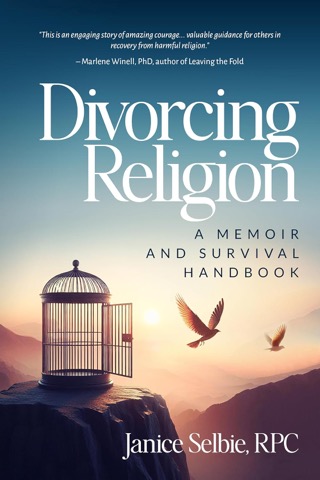
Divorcing Religion
Janice Selbie. Tactical guide to surviving high-control religious exits.
Buy on Amazon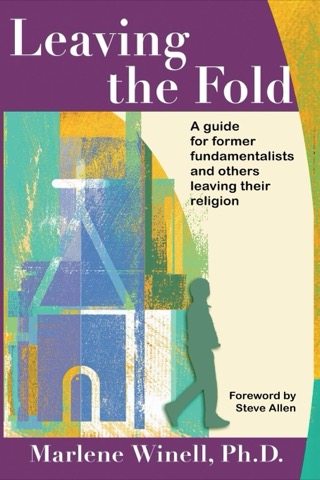
Leaving the Fold
Marlene Winell. Clinical roadmap for healing from Religious Trauma Syndrome, from the psychologist who named it.
Buy on Amazon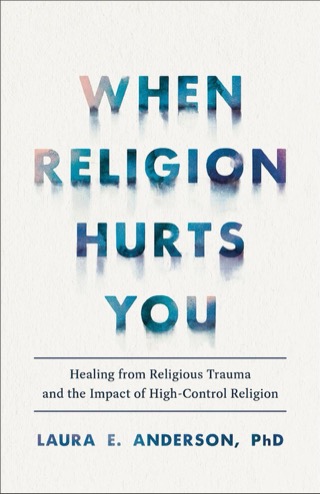
When Religion Hurts You
Laura E. Anderson. By a therapist who specializes in religious trauma and has lived it herself.
Buy on Amazon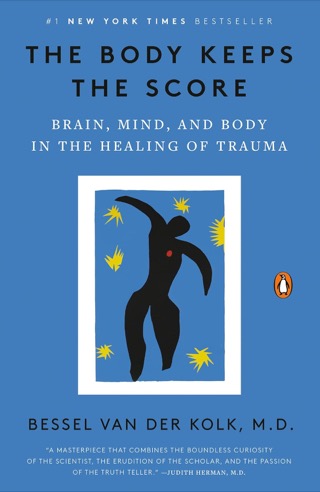
The Body Keeps the Score
Bessel van der Kolk. Why trauma lives in the body, and why “just think your way out of it” was never going to work.
Buy on Amazon

You Are Your Own
Jamie Lee Finch. Reclaiming the body from religious shame and indoctrination.
Buy on AmazonThe Ebony Exodus Project
Candace R. M. Gorham. Breaking psychological bondage within the Black church.
Buy on Amazon
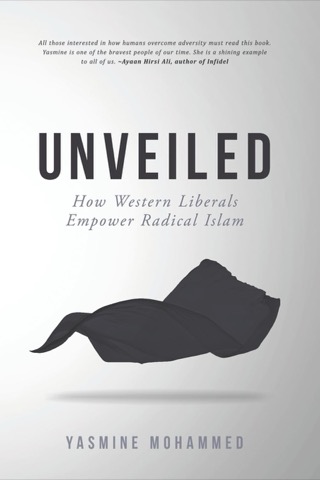

Empty the Pews
Chrissy Stroop. Diverse accounts of deconversion and finding secular life.
Buy on Amazon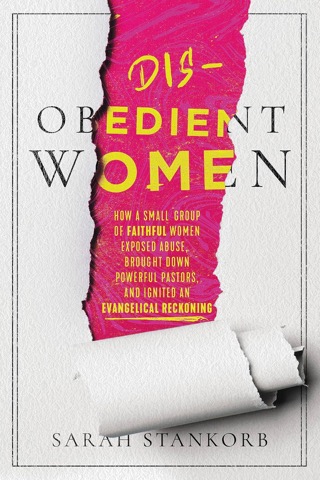
Disobedient Women
Sarah Stankorb. Stories of women dismantling patriarchal religious structures.
Buy on AmazonOther:
Recovering from Religion: A 24/7 hotline for when the "shame rash" flares up.
Do you have religious trauma? Free Quiz
Religious trauma FAQ: the questions you keep sending me
Is religious trauma a real diagnosis?
Religious Trauma Syndrome is not its own listing in the DSM-5. What the DSM-5 does include is a code called “Religious or Spiritual Problem” (V62.89/Z65.8) under Other Conditions That May Be a Focus of Clinical Attention, and a growing number of therapists treat religious trauma specifically. Psychologist Marlene Winell coined the term in 2011 because survivors needed a name for the pattern. The DSM didn’t recognize PTSD until 1980, either. A missing code doesn’t make symptoms less real.
What are the signs of religious trauma?
They fall into five buckets: cognitive (decision paralysis, black-and-white thinking, identity confusion), emotional (anxiety, panic attacks, depression, guilt, anger), functional (sleep problems, nightmares, substance use, disordered eating), social (family rupture, shunning, losing your whole circle at once), and developmental (playing catch-up on skills that were restricted growing up, like dating, money, and independent decisions).
Can you have religious trauma without being abused?
Yes. Religious trauma doesn’t require one abusive incident. Years of chronic fear-based teaching (hell, damnation, surveillance of your thoughts), information control, and a community built so that leaving costs you your family and identity cause real, measurable harm on their own. Chronic fear does to a nervous system what chronic stress does to a body: damage, no single villain required.
How long does it take to heal from religious trauma?
There is no fixed timeline, and anyone promising one is selling something. Most people describe it in years, not months, especially when religion shaped their whole worldview and social circle. It comes in waves: expect grief and old fear to resurface around holidays, family events, and milestones your old community would have marked differently. That’s recovery working, not failing.
Do I need to be an atheist to have religious trauma?
No. Plenty of people healing from religious trauma stay privately spiritual, land somewhere agnostic, or keep a cultural connection to their tradition while rejecting the parts that hurt them. Religious trauma is about the harm a specific controlling environment did to you. It is not a verdict on belief itself.
What kind of therapist should I look for?
One who specifically lists religious trauma, religious deconstruction, or high-control group recovery among what they treat, not just a general trauma therapist. Family estrangement, identity rebuilding, and intrusive religious fear are specific enough that experience with them matters, and you shouldn’t have to teach your own therapist the basics.
Is it normal to still feel guilty or afraid after leaving?
Extremely normal, and one of the most common symptoms people report. If you spent years being taught that doubt itself was dangerous, that conditioning does not switch off the day you walk out. Fear and guilt that fade over time, with real effort, are the recovery process working, not proof you’re doing it wrong.
What if my family won’t speak to me anymore?
Family rupture is one of the most painful and most common parts of this particular trauma, and it is real grief. Communities that shun members for leaving are, by definition, using the threat of family loss as a control mechanism. That does not make it hurt less, but it does mean the rupture is a feature of the system, and never a personal failure on your part.
Have you tangled with the phantom pew yourself? What actually helped? Tell me in the comments. Your story might be the thing that gets somebody else through the door. And if you’re in the thick of it right now: you are not broken, you are not dramatic, and you are sure as hell not alone.
Sources (because we’re atheists)
The Emotional Brain: The Mysterious Underpinnings of Emotional Life by Joseph Ledoux
Tips to leverage neuroplasticity to maintain cognitive fitness as you age
Religious Trauma Syndrome: It’s Time to Recognize It by Marlene Winell, 2011
DSM-5, “Religious or Spiritual Problem” code V62.89/Z65.8 (clinical discussion)






Comments
Join the conversation. New comments are reviewed before appearing.