

You left the religion. You did the therapy. You had the fights. You rebuilt yourself from the ground up without a single deity to spot you. And now you're lying awake wondering if your ten-year-old is going to find God just to piss you off.
Today's letter comes from someone I'll call "Overthinking Mom," and I feel this:
Dear GM,
I left religion dramatically. There were fights. Therapy. The whole thing.
My kids (10 & 13) have grown up hearing why I left.
Now I’m worried they’ll “find Jesus” just to push back against me someday.
Is that a thing? Or am I projecting my own trauma onto hypothetical teenagers?
-Overthinking Mom
---
Dear Overthinking Mom,
Right now, my 17-year-old son isn't talking to me. It wasn't like a fight or a falling out. He just... doesn't talk. I see him talk endlessly with his friends and his girlfriend. But when it comes to me and his father? We get grunts. He answers every question with either, "I don't know," or "Hamburger." It's frustrating for sure, but I just keep reminding myself: this is the horrible phase where your babies pull away and assert their own individualism. Sometimes, that means they need a bit more space between them and you. That can look like communicating solely with grunts, or it can look like like exploring the very religion their mom left through blood, sweat and tears.
What they are doing is pulling as far away from their parents as possible without breaking the bonds. They need to do this to figure out who they are. Understand, they have always existed in the context of your family, but when they become teenagers, they are about to embark on life on their own. In order to understand themselves outside of the context of the family, which is where they will be when they move out or go to college, they need to distance themselves from it in the safest way possible. That usually manifests in rebellion or distance between kiddo and parents.
Adolescent rebellion is one of the most thoroughly documented phenomena in developmental psychology. It is the engine that separates children from parents, the biological mechanism by which your kids eventually stop needing you to cut their grapes. It is not a moral failing. It is not a referendum on your parenting. It is, in fact, proof that you raised a person capable of independent thought, which is the entire point.

Here's what rebellion actually requires: a position to push against. If you had stayed religious, your kids might have become atheists. If you'd been a strict vegetarian, at least one of them would currently be fantasizing about a gas station hot dog. If you have very strong opinions about the Oxford comma, as one does, one of them is going to start writing comma splices out of sheer spite by age fifteen. The content of the rebellion is almost beside the point. They're not pushing against your atheism specifically. They're pushing against you, because you are the gravity they need to escape in order to figure out who they are on their own.
That said: here is what the data actually shows, because I believe in evidence and so do you:
Studies on religious identity in adolescence and young adulthood consistently show that the single biggest predictor of a child's adult religiosity is the religiosity of the household they grew up in. Children raised without religion are significantly more likely to remain non-religious as adults. Not because they were denied a choice, but because they were raised with habits of mind that make the supernatural a fairly hard sell. Critical thinking is stubborn. Once it's in there, it doesn't go away because someone at a youth group offered your kid free pizza and a sense of community.
What you're actually worried about isn't really Jesus. Jesus is a placeholder. What you're worried about is that your kids will mistake a performance of rebellion for a genuine belief, build a life around it, and you'll have to watch from the outside while they do. That's a legitimate fear. It's also a fear about something you can't control, which is what makes parenting so relentlessly humbling.
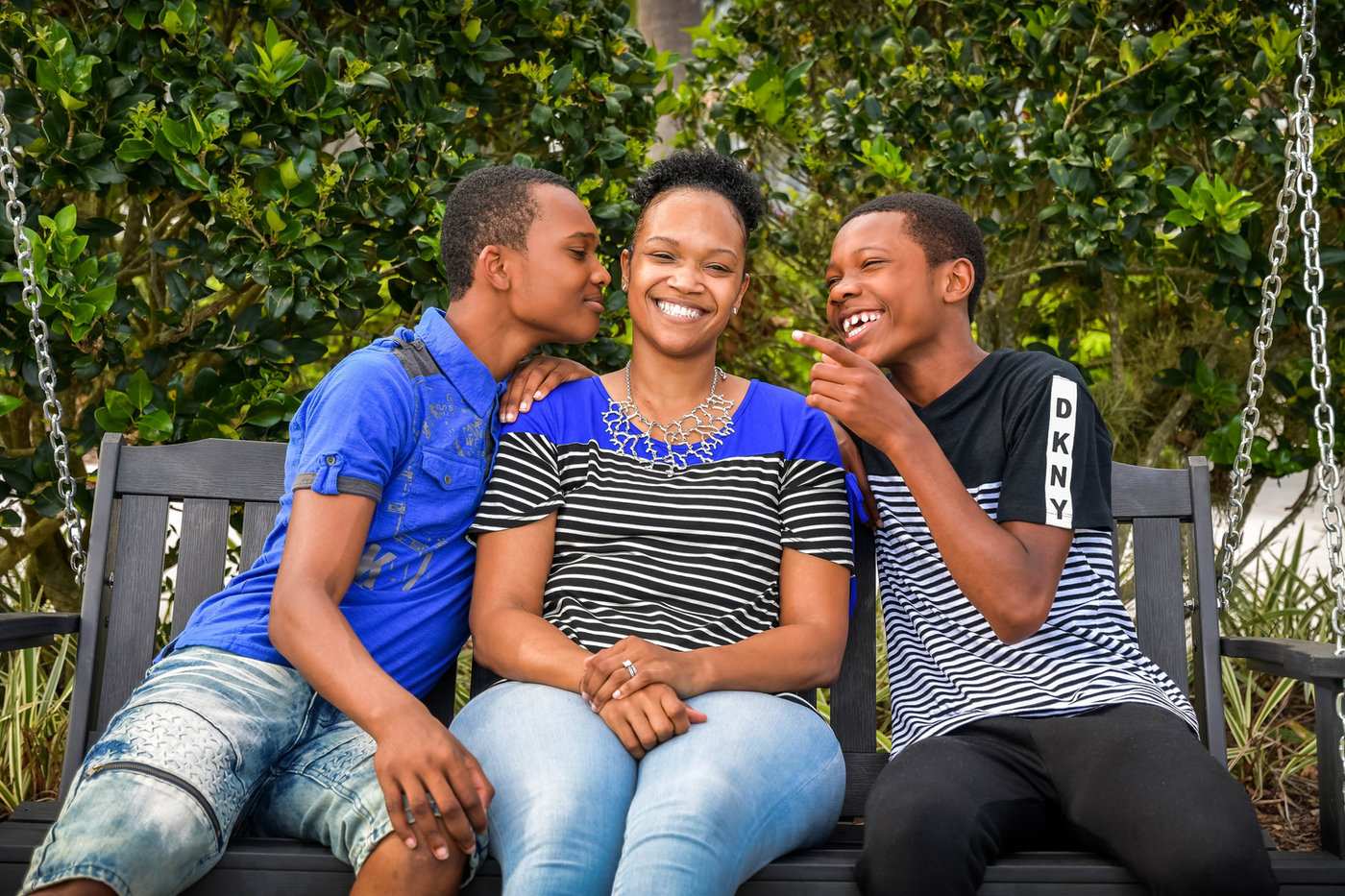
Here's what you can control: You can model what a person looks like when they've interrogated their beliefs and arrived somewhere real. You can have the kind of household where your kids can say "I've been reading about this, and I don't know what I think" without you treating it like a betrayal. You can make doubt feel safe, because doubt is actually how you got here.
The teenagers most likely to sprint toward religion aren't the ones who were raised by atheists who talked openly about why they left and what they found on the other side. They're the ones who were raised in houses where certainty was enforced, where questions were quietly discouraged, where the wrong answer to a philosophical question had social consequences. Does that sound familiar? It should, because you left it.
You didn't raise your kids in that house, hun. By very definition, an atheist cannot.
So: are you projecting your own trauma onto hypothetical teenagers? Partially, yes. Your brain has a scar from a specific kind of institution that used certainty as a weapon, and when it sees anything resembling that pattern (even in a hypothetical future teenager, even in your own child) it flinches. That's just straight-up muscle memory doing its job.
But here's the thing about projecting: the projection is yours. The hypothetical teenager doesn't exist yet. And the real kids, the ten and thirteen year olds you are actually raising right now, aren't showing you signs of secret evangelical leanings. They're showing you a parent who cares so much about getting this right that she wrote to someone with experience for advice.
That's not a parent whose kids are headed for a megachurch.
That's a parent who did the work. Well done, mama.
- GM
Got a question for Ask GM? Send it to mommy@godlessmom.com with the subject line 'Ask GM.' I read every email, and I might feature yours in a future post (anonymously, of course).
Join me on Patreon for patron-only articles and content: click here.

The Demon-Haunted World: Science as a Candle in the Dark by Carl Sagan
Buy Now
Calling Bullshit: The Art of Skepticism in a Data-Driven World by Carl T. Bergstrom
Buy Now
Raising Freethinkers: A Practical Guide for Parenting Beyond Belief by Dale McGowan, Molleen Matsumura, Amanda Metskas, and Jan Devor
Buy Now


Comments
Join the conversation. New comments are reviewed before appearing.
Great advice! Encouraging questions and speaking openly about all kinds of different beliefs helps to build those critical thinking skills.
It’s reassuring to see this calm take on teen rebellion over religious identity, and kablora has great resources that expand on raising critical-thinking kids without fearing their self-exploration.
Sign in or verify your email to leave a comment.